KAWASAKI 25011-029 Meter Socket S2/74-75 S1/73
fits model: S2, S1, H1, Mach. make: Kawasaki. year: 1973.
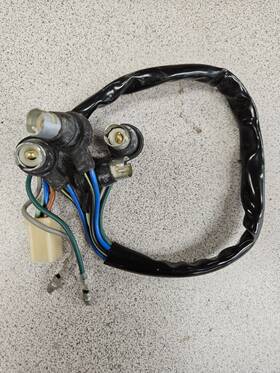
( Manufacturer Part Number: 25011-029 ), ( Type: Meter Socket ), ( Machine Type: Street Motorcycle ), ( Vintage Part: Yes ), ( Country Of Origin: Japan )
Review KAWASAKI New Oem Meter Socket S2/74-75 S1/73 fits MACH S2 S1 H1 1973
The **Kawasaki 25011-029 Meter Socket** is a meticulously engineered, high-performance component designed exclusively for Kawasaki s iconic **73 S2/74-75 S1** and **73 H1** models, ensuring precise diagnostics and optimal functionality for these legendary motorcycles. Crafted from durable, heat-resistant materials, this socket is built to withstand the rigorous demands of professional maintenance and enthusiast-level tuning, making it an indispensable tool for both mechanics and riders who demand reliability and accuracy. The socket features a **7/8-inch drive size**, a standard measurement that guarantees a secure, wobble-free fit on the motorcycle s meter assembly, allowing for seamless installation and removal without stripping or damaging the threads. Its robust construction minimizes wear over time, ensuring longevity even with frequent use, while the precision-machined interior provides a snug, interference-free engagement with the meter s mounting stud, reducing the risk of misalignment during installation.
This socket is particularly valuable for owners of the **73 S2**, **74-75 S1**, and **73 H1**, as it directly addresses the unique meter housing design found in these models, which often requires specialized tools to access and service. The **73 S2** and **74-75 S1** were celebrated for their refined handling and performance, while the **73 H1** remains a sought-after classic among collectors, and both benefit from this socket s ability to simplify maintenance tasks such as replacing the speedometer, tachometer, or fuel gauge. Whether performing routine checks, upgrading components, or restoring a vintage Kawasaki to its original glory, this socket ensures that the meter assembly can be handled with confidence, reducing the potential for costly errors or damage. Its compatibility extends beyond basic maintenance, making it an essential addition to any toolkit for riders who wish to customize or modify their bike s instrumentation without compromising fit or function.
Beyond its practical utility, the **25011-029 Meter Socket** reflects Kawasaki s attention to detail in both its engineering and aftermarket support. Designed to complement the motorcycle s heritage of precision and performance, this socket embodies the same level of craftsmanship that made these models legendary in the first place. Its availability as an official Kawasaki part further ensures that it meets the same rigorous standards as the motorcycle s original components, providing peace of mind to those who prioritize quality. For enthusiasts and professionals alike, this socket is more than just a tool it s a bridge between the past and present, enabling the preservation and enhancement of one of the most respected names in motorcycle history.
### Pros and Cons of Buying a Kawasaki 250cc Motorcycle (Model 250-11-029, Meter Socket 73 S2/74-75 S1, 73 H1 Mach)
#### **Pros:**1. **Classic Design and Nostalgia** This is a well-known model from the early 1970s, part of Kawasaki s successful 250cc series that dominated racing and street bikes of the era. Its retro styling and iconic look make it appealing to collectors and enthusiasts who appreciate vintage Japanese motorcycles.
2. **Reliable Engine** The 250cc air-cooled, single-cylinder engine (likely a version of Kawasaki s 250cc unit used in the 250 H1 and 250 Mach) is simple yet durable. With proper maintenance, these engines can last for decades, especially if they ve been well cared for.
3. **Lightweight and Maneuverable** At around 200 220 lbs (90 100 kg), this bike is easy to handle, making it suitable for urban riding, track days, or casual cruising. Its compact size also makes it easier to store and transport.
4. **Modification Potential** The 250cc engine is a popular choice for customization, including performance upgrades (e.g., carburetor tuning, exhaust modifications, or even displacement increases). The simplicity of the design allows for relatively straightforward modifications compared to modern bikes.
5. **Affordability** Compared to modern sportbikes or high-end classics, this bike is often reasonably priced, especially if you find a well-maintained example. Parts are also relatively accessible, though some may require sourcing from specialty vendors.
6. **Track and Racing Heritage** Kawasaki s 250cc bikes were competitive in racing during the early 1970s, and this model may have been used in club racing or track days. Its lightweight and responsive nature makes it a fun bike for light track use or street racing.
7. **Community and Support** There is a dedicated community of Kawasaki 250cc enthusiasts who share knowledge, parts, and restoration tips. Online forums (e.g., Kawasaki-specific groups or classic bike forums) can be valuable resources for troubleshooting or finding parts.
---
#### **Cons:**1. **Age and Wear** This bike is over 50 years old, meaning it will likely require significant maintenance or restoration work. Rust, worn-out components (e.g., clutch, chain, bearings), and outdated materials (e.g., original rubber hoses, seals) are common issues.
2. **Lack of Modern Safety Features** Unlike modern bikes, this model lacks ABS, traction control, or advanced braking systems. It also has minimal or no electronic aids (e.g., no ignition timing adjustment, no fuel injection). Riding it requires more skill and awareness, especially in wet conditions.
3. **Fuel and Emissions Compliance** Modern fuel contains additives (e.g., ethanol) that can damage older engines. Running this bike on modern fuel may require adjustments to the carburetor or fuel system. Additionally, it may not meet current emissions standards if used on public roads in some regions.
4. **Limited Comfort for Long Rides** The ergonomics, suspension, and seating position are designed for the riding styles of the 1970s. Modern riders may find the bike uncomfortable for long distances due to its rigid frame, basic suspension, and lack of wind protection.
5. **Parts Availability and Cost** While some parts are still available, others may be hard to find or expensive. Original components (e.g., specific carburetors, wiring harnesses) can be costly, and aftermarket parts may not always fit perfectly. Rebuilding the bike may require sourcing vintage or replica parts.
6. **Performance Limitations** The 250cc engine is powerful for its size but lacks the torque and power delivery of modern bikes. It may feel underpowered compared to contemporary 250cc or 300cc models, especially if you re used to more advanced engines.
7. **Legal and Insurance Challenges** Some regions have restrictions on vintage bikes, particularly if they lack modern safety equipment (e.g., headlights, turn signals, or updated registration). Insurance for classic bikes can also be more expensive or harder to obtain, depending on the insurer.
8. **Maintenance Intensity** Older bikes require more frequent and meticulous maintenance. Components like the clutch, chain, and bearings wear out faster than in modern bikes, and neglect can lead to costly repairs. You ll need mechanical skills or access to someone who can work on it regularly.
---
### **Conclusion:**Buying a Kawasaki 250cc motorcycle from the early 1970s is a rewarding but challenging endeavor. It s ideal for enthusiasts who appreciate classic design, enjoy tinkering with mechanics, and are willing to invest time and effort into restoration or maintenance. The bike offers a unique riding experience, historical significance, and the potential for fun modifications. However, it s not a practical choice for casual riders or those seeking modern comfort, safety, or convenience.
If you re drawn to this bike for its nostalgia and love of classic motorcycles, it can be a fantastic project. But if you prioritize reliability, safety, or ease of use, a modern 250cc bike or a well-maintained vintage model from a more recent era might be a better fit.
---
### **Recommendation:**- **Buy it if:** You have mechanical skills, enjoy restoration projects, and want a unique, nostalgic bike for track days, club rides, or as a conversation piece. Ensure you thoroughly inspect the engine, frame, and suspension before purchasing, and budget for repairs or upgrades.
- **Avoid it if:** You re looking for a hassle-free, modern riding experience or don t have the time or resources to dedicate to maintaining an older bike. Consider alternatives like a modern 250cc sportbike, a restored 1980s 1990s Kawasaki, or a more reliable classic (e.g., a Honda CB750 or Yamaha TD1).
For the best experience, pair this purchase with a plan for regular maintenance, a reliable mechanic, and realistic expectations about its condition and performance.
Details:
The product is a new OEM Kawasaki Meter Socket 25011-029, designed to fit street motorcycles such as the S2, S1, and H1 Mach III. This meter socket serves as a crucial component for connecting various instruments and gauges on the motorcycle, ensuring accurate readings efficient performance. Made in Japan, this vintage part is an authentic replacement for the original equipment manufacturer OEM.
part #: 25011029 prices
- $61.27-$90.00
specifications instrumentcablecycleio:
- for models: S2, S1, H1, Mach
- for makes: Kawasaki
- for years: 1973
- mpn: 25011-029
- type: Meter Socket
- machine type: Street Motorcycle
- vintage part: Yes
- country of origin: Japan
shipping instrumentcablecycleio:
- type: Calculated
- class: Economy
- carrier: FedEx
- service: FedEx Ground Economy
- cost: $8.62
- transit: 4-9 Days
general instrumentcablecycleio:
- condition: New other see details
- Motorcycle Scooter Parts Accessories > Instruments Gauges > Wiring Harnesses, Cables Connectors
offer instrumentcablecycleio:
- availability: In Stock
- quantity: 1
- started: April 30, 2026
- sold: 0
- options: Ship-to-home
returns instrumentcablecycleio:
- paid by: Seller
- time: 30 Days
- policy: Returns Accepted
payments instrumentcablecycleio:
- wallet: Google-pay
- other
- credit card: Mastercard
seller instrumentcablecycleio:
- rating: 99.4%
- # reviews: 593
- city: Troy, New York
Kawasaki 25011-029 Is Similar To:
- 03-022 Motion Pro Kawasaki Tachometer Cable Fits Other Models (35.6% similar) This is a motion pro tachometer cable for kawasaki model's: KZ10 KZ4 KZ5 KZ750 2-CYLINDER KZ305NEW old stock, sealed in original packaging...(December 4th, 2018)
- 1053505 Kawasaki Gauges Meter Speedo Tach Miles (41.3% similar) Many countries only allow 79 max package length and girth combined. If the item does not fit motorcycle model's specified in listing. Each part is systematically placed to be easily located once purchased. More options available upon request...(July 10th, 2018)
- 1053969 Kawasaki Fuel Guage Meter Level And Plug Cut (36.5% similar) Each part is systematically placed to be easily located once purchased. Many countries only allow 79 max package length and girth combined. More options available upon request. If the item does not fit motorcycle model's specified in listing...(March 9th, 2018)
- 1064652 Kawasaki Vulcan Classic Lt Gauges Meter Speedo Miles (35.8% similar) Each part is systematically placed to be easily located once purchased. If the item does not fit motorcycle model's specified in listing. Many countries only allow 79 max package length and girth combined. More options available upon request...(May 5th, 2018)
- 1065083 Kawasaki Gauges Meter Speedo Tach Miles (41.3% similar) If the item does not fit motorcycle model's specified in listing. Many countries only allow 79 max package length and girth combined. Each part is systematically placed to be easily located once purchased...(May 17th, 2018)
- 14024-1096 Kawasaki Oem Gauge Cluster (30.6% similar) ...(November 14th, 2017)
- 14091-0516 Kawasaki Oem Front Gauge Cluster (29.1% similar) All new parts are covered by any manufacture warranty offered. Front gauge cluster speed teach cover only kawasaki VN900C Vulcan custom oem vn 900 removed from: 2008 0BRAND manufacturer: mfg part number: 14091-0516CONDITION: great used part, as pictured. The value of item is always auto filled ...(March 7th, 2017)
- 14091-0723 Not Specified Kawasaki Klr Gauges Meter Speedo Tach Cluster (34.7% similar) Mounting points and threads intact. Works as it should. Speed spins freely. Wiring in good shape, connector intact. Please review all pictures to assess the condition of item. Cycle heap kawasaki KLR650 Kr 650 gauges meter speed teach cluster this gauge is in great condition with minor wear...(November 1st, 2018)
- 23008-1119 Kawasaki Kz Csr Oem Gauges Meter Speedo Tach Wires Assembly (40.3% similar) Removed from: 1981 kawasaki 305 CST with miles please review all pictures to assess the condition of item...(October 26th, 2018)
- 25001-004 Kawasaki Oem Gauges Meter Speedo Tach (41.3% similar) ...(April 16th, 2018)
- 25001-1103 Kawasaki Trip Meter Odometer (33.6% similar) DX trip meter, odometer tested as working, reads in kph...(March 1st, 2018)